
Original Writing
What’s Really in Our Braiding Hair? Black Women Are Asking Questions
Braids are more than a hairstyle. For generations, they have been deeply rooted in Black culture, identity, creativity and tradition. But as millions of Black women continue to wear synthetic braiding hair for weeks at a time, a growing question deserves attention: What exactly are we putting on our scalps?
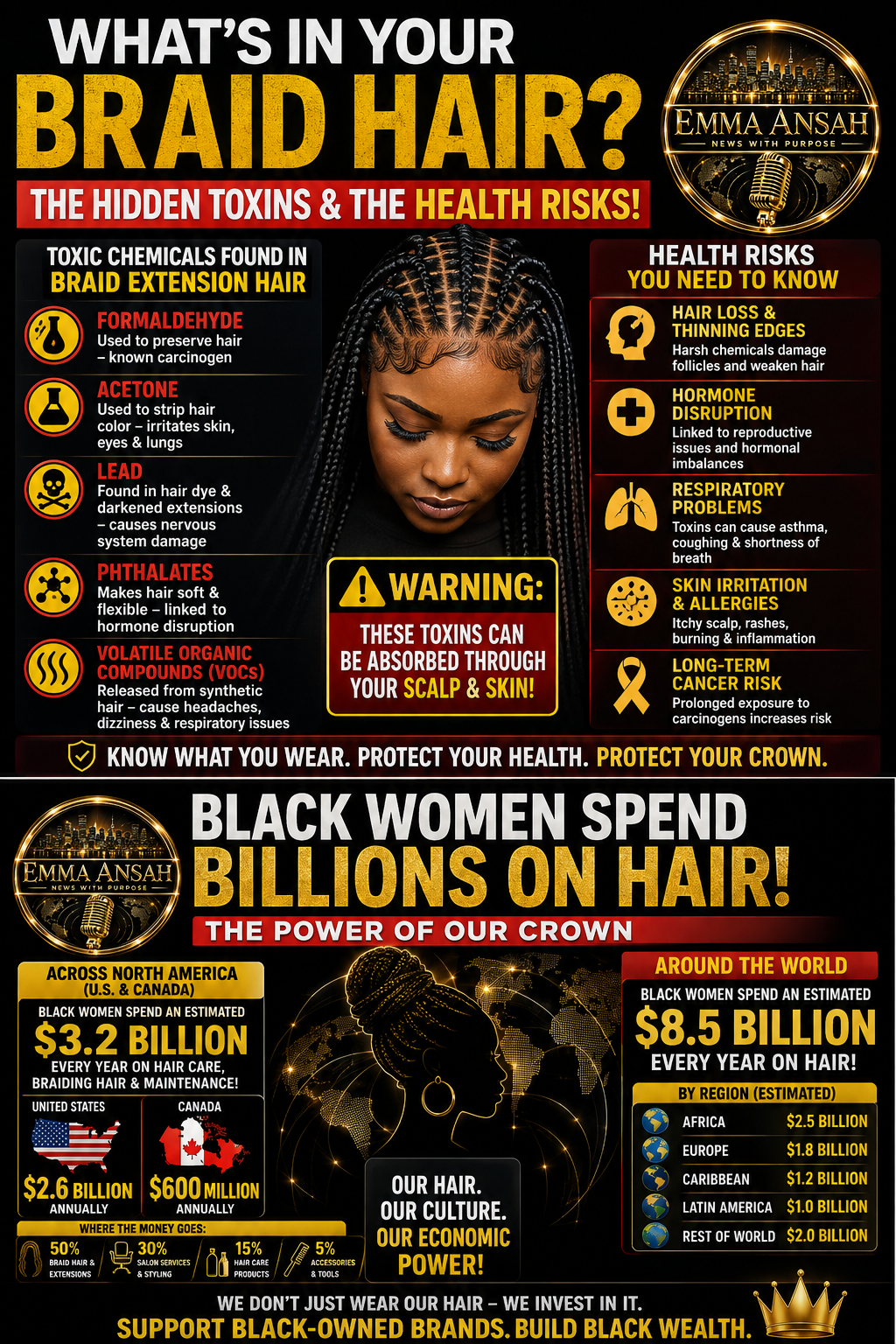
Infographic: toxic chemicals found in braid extension hair and the health risks every wearer should know.
Researchers, consumer advocates and Black women themselves have raised concerns about chemicals that may be present in some synthetic braiding hair products and the potential exposure that comes with wearing them close to the skin for extended periods.
Many women are already familiar with the itching, burning, irritation or tenderness that can sometimes happen after getting braids installed. Some have even resorted to washing or soaking synthetic hair before installation in an attempt to reduce irritation.
But the conversation is getting bigger.
Could ingredients or chemicals associated with certain synthetic hair products be contributing to scalp problems? What role, if any, could they play in hair breakage or thinning? And when women notice their edges seemingly disappearing after repeatedly wearing braided styles, is it strictly the tension from tight braiding, or are there other factors worth investigating?
It is important to separate what researchers have established from what is still being studied. Hair loss around the hairline is commonly associated with traction alopecia, which can develop when hairstyles repeatedly pull on the hair follicles. That doesn't mean questions about chemical exposure should be dismissed.
Synthetic braiding hair can be made from various plastics and fibers and may undergo chemical processing during manufacturing. Recent testing and advocacy have increased scrutiny over what substances may be found in some products and whether consumers are being given enough information about them.
And that raises an uncomfortable question: Are products marketed heavily to Black women receiving the safety scrutiny we deserve?
Black women spend significant money on hair and beauty products. We should not have to become chemists just to figure out whether something designed to sit directly against our scalps is safe.
Braids aren't the problem. Our culture isn't the problem. The issue is making sure the products being sold to us meet appropriate safety standards and that manufacturers are transparent about what consumers are actually buying.
Beauty should never require us to gamble with our health.
So before that next braid appointment, it may be worth asking one more question alongside “What colour am I getting?”
What exactly is in this hair?